Success Story: How Ultimation Supported a Major Airport Conveyor Retrofit

An engineering and logistics integrator turned to Ultimation, an MCE company, for support on a conveyor system retrofit at a major airport. The project involved upgrading existing baggage-handling equipment to address maintenance and downtime issues while retaining much of the existing infrastructure.

Challenge

The project called for replacing key conveyor components while keeping the existing frames. Any proposed solution needed to meet the facility’s operating requirements.

From the start, the integrator was interested in equipment from Interroll Portec, which Ultimation offers. However, Interroll Portec had not previously been on the airport’s approved vendor list. Once approval was secured, the integrator still needed to demonstrate that the alternative would meet the airport’s technical requirements while offering competitive pricing and lead times.

Complicating matters, the integrator had experienced significant delays in getting a quote from its previous supplier. Moving the project forward required timely pricing, detailed equipment specifications, drawings, and technical documentation to help the integrator evaluate its options and make a recommendation to the airport.

Solution

The integrator worked with the airport to conduct measurements and studies and determine the required conveyor configurations. Ultimation helped the integrator’s engineering team identify equipment that would meet requirements, including speed, load capacity, and the ability to handle different types of baggage, from standard suitcases to boxes, and oversized items such as golf clubs.

Ultimation provided:

  • A detailed quote and itemized equipment list
  • Component drawings and layouts
  • Manufacturer documentation and technical manuals
  • Pricing and lead-time information
  • Direct communication and coordination throughout the quoting process

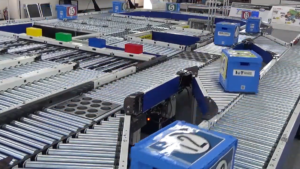
Ultimation, in partnership with the integrator, chose specialized equipment from Interroll Portec for spiral-belt and straight-belt conveyors. The project used the existing conveyor frames and replaced key internal components, including belts, motors, and other components, to upgrade the equipment.

Ultimation delivered the initial quote in approximately five days, giving the integrator the information it needed to compare the proposed equipment with the previously approved option and move the project forward.

Interroll Portec also supported the project with technical assistance, along with warranty and service support for the equipment.

Outcome

“It was a team effort. The integrator was very pleased with the amount of communication they were getting from our team.” – Janine Nikkel, Inside Sales Rep, Ultimation

The retrofit allowed the facility to upgrade existing equipment rather than replacing the entire conveyor framework, preserving usable infrastructure and reducing the cost and complexity associated with a full system replacement.

The conveyor project’s success came down to more than the equipment itself. Working together with the integrator, Ultimation was able to help them evaluate and sell an alternative solution in a timeline that made sense for their customer.

Communication and responsiveness were also key to success. The previous supplier took several months to provide a quote, delaying a necessary upgrade. Ultimation’s team coordinated the quote process, focusing on both the integrator’s and airport’s needs and providing fast quoting, competitive pricing, strong communication, and transparency throughout the process.

The project moved quickly from the quoting stage in mid-January, with final delivery in the first week of April.

Because of the success of this project, Ultimation is now working with the integrator on a second comparable Phase 2 project for the same facility.
5 Questions to Answer Before Designing an Automated Tire-and-Wheel Transport Conveyor System

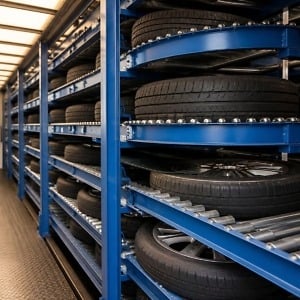
Automated tire-and-wheel conveyor trailers reduce manual handling, maintain sequence from the tire-and-wheel facility through delivery, and keep assemblies moving to the line at the required production rate.

But getting those benefits requires designing the system around the application. Production volume, tire-and-wheel sizes, travel requirements, and the plant itself can all affect what the final system looks like.

We work through those operating requirements with the manufacturer and other partners in the tire-and-wheel program. The process starts by answering five questions about how the system will need to operate.

1. How fast does production need to run?

The expected job rate gives a starting point for determining how much tire-and-wheel capacity needs to move through the system. From there, we consider trailer capacity and how many trailers need to be circulating to support production.

At any given time, one trailer may be loading while another is traveling to the plant, another is unloading, and another is making the return trip. The fleet needs enough capacity across that cycle to keep pace with the assembly line.

Properly sizing the system helps manufacturers maintain the required flow without paying for unnecessary capacity or discovering later that a fleet can’t keep pace.

In one case, our initial calculations indicated that a manufacturer would need more than the two trailers it planned to purchase. As production requirements developed, the manufacturer ultimately added two more.

2. What tire-and-wheel assemblies will the system handle?

Size and weight are important considerations and can have a cascading effect on the system. Larger assemblies take up more physical space, which can reduce the number that fit within a trailer. Additional weight also must be considered when trailers travel on public roads.

Those considerations have become more important as tire-and-wheel assemblies have grown larger, particularly for trucks and other larger vehicles. We look at the full range of assemblies the trailer will need to carry rather than sizing the system around a single tire size or configuration.

That information helps determine a configuration that can accommodate the manufacturer’s product mix while making effective use of available trailer capacity.

3. What does the complete delivery cycle look like?

The number of assemblies a trailer can carry is only part of the capacity picture. We also look at how the trailers will operate between the tire-and-wheel facility and the assembly plant:

  • How far apart are the facilities?
  • How long does loading and unloading take?
  • How quickly does an empty trailer return?
  • How many trailers need to be in circulation at once?

Two plants running at the same production rate could require different trailer fleets. If one tire-and-wheel facility is farther from the assembly plant, each trailer spends more time in transit before it becomes available for the next cycle.

The delivery process also affects how assemblies are handled along the way. An automated system can maintain sequence through transport and unload directly into the plant’s material-handling system, reducing manual transfers between the supplier and the assembly line.

Looking at the complete cycle helps us determine the capacity needed to maintain a consistent supply of assemblies to production.

automated tire and wheel conveyors


4. How will the tire-and-wheel conveyor system fit the existing plant?

We never design a trailer in isolation. Our team looks at how it will dock, connect and operate within the manufacturer’s existing environment.

Details like these are much easier to accommodate during system design than after equipment arrives on site. That makes a review of the dock area and surrounding infrastructure an important part of the process, especially when the system is being added to a facility rather than designed into a new one.

The same applies to the equipment on either side of the trailer. The trailer must work with the loading system at the tire-and-wheel facility and the receiving system at the assembly plant, so we consider those interfaces as part of the application rather than treating the trailer as a standalone piece of equipment.

For example:

  • One facility’s pavement slope required us to account for how the trailer would sit at the dock.
  • An existing structural beam at another plant affected the loading/unloading arrangement.
  • Safety fencing at another application influenced where drivers could connect the trailer.

Those aren’t unusual exceptions, but it’s important to evaluate the actual environment and work with the customer to determine how the system needs to fit within it.

Addressing these conditions during design reduces installation and commissioning problems and creates a smoother interface between transportation and the plant’s existing material-handling system.

5. What might change over the life of the tire-and-wheel equipment?

Automated trailers can remain in operation for decades. During that time, production volumes, vehicle programs, and tire sizes can all change.

That doesn’t mean designing today’s system around every vehicle or tire size a manufacturer might produce someday. But if a new program is already planned, production volumes are expected to change, or larger assemblies are on the roadmap, those requirements are worth discussing before the initial design is finalized.

We have worked with customers to modify existing trailers for new vehicle programs rather than replace equipment that is still mechanically sound. Whether that’s possible depends on how significantly the new requirements differ from the original application.

Considering known changes early can help manufacturers determine where it makes sense to build flexibility into the initial design and potentially extend the useful life of the equipment across multiple programs.

Start With the Application

The right configuration depends on more than how many assemblies need to fit in a trailer. The process starts with understanding how the system needs to operate within the manufacturer’s production and delivery environment.

Taking that approach early helps manufacturers avoid discovering capacity or integration issues later and gives them a system designed to reduce handling, preserve sequence, and keep tire-and-wheel assemblies moving at the rate production requires.

Ultimation, an MCE company, is a turnkey vendor. We help our customers identify the right solution for their operation. This includes:

  • Dock geometry that may need a leveling ramp
  • Safety Restraint Systems
  • Electrical panel to control the trailer operation
  • In-plant conveyors to send or receive the tire/wheel assemblies
  • In-plant tire/wheel buffer system
  • Spare parts supplies to support the trailer lifecycle

Learn more about automated trailers for loading and unloading tire-and-wheel assemblies.

How Choosing the Right Food-Grade Belt Conveyor Boosts Safety and Efficiency

Safe and efficient food handling is top of mind for customers today.

That increased attention puts a spotlight on the need to continuously improve processes, workflows, and tools, while steadily reducing the potential for errors and accidents in food processing and distribution environments.

Choosing the right conveyor setup can help you meet those goals while improving how products move through your facility. Features that simplify cleaning, reduce product damage, and make maintenance easier can help you limit contamination risks while keeping production moving.

Ultimation has added two food-grade belt conveyors to its product lineup, both of which offer stainless steel construction for washdown environments, as well as hygienic designs that make them ideal for food contact applications.

In food-handling environments, conveyor construction also matters because surfaces and components that are easier to access and clean can simplify sanitation routines and help prevent product buildup.

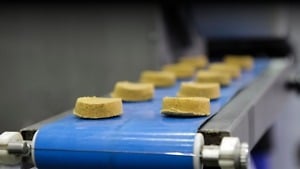
Ultimation Fabric Belt Conveyors provide a smooth, continuous conveying surface in addition to gentle handling of finished goods.

Ultimation Modular Plastic Belt Conveyors are made of plastic modules assembled in an interlocked pattern. Their design makes them both easy to clean and low-maintenance, because damaged modules can be conveniently replaced without having to change out the entire belt.

Both solutions can be adapted to meet specific FDA, USDA, or BEAG sanitary application requirements.

Choosing the Right Food-Grade Conveyor

Keep in mind that there isn’t a single, universal “best” belt conveyor. Homing in on the right conveyor for your facility depends on your needs and requirements. Here’s a short list of questions that can help guide you toward making the right selection.

  • Product: Is the product raw, packaged, frozen, delicate, or abrasive?
  • Sanitation: How often is the conveyor cleaned? What level of washdown is required?
  • Environment: Is the process wet or dry? Is this being used in a low-temperature application such as a freezer, or as an infeed for a high-temperature application such as an oven?
  • Maintenance: How important is minimizing downtime for repairs?
  • Footprint: Are there inclines, declines, or lifters required?
  • Throughput: How quickly does the product need to move across the conveyor line?
  • Controls: Does your operation require an indexing conveyor, continuous run conveyor, or zoned conveyor with Zero-Pressure Accumulation (ZPA) functionality?
  • Integration: Is this conveyor integrating with any other pieces of equipment such as scanners, labelers, or robots?

The answers can narrow the field. Products that require gentle handling and a continuous surface may point toward fabric, while demanding washdown applications or operations where easy belt repair is a priority may favor modular plastic.

food on food-grade belt conveyor

Fabric vs. Plastic Food-Grade Belts

Fabric belts are the best option for handling small or lightweight items like bakery products, confectionary, or any packaged goods that can benefit from a softer touch and a little extra TLC.

Fabric belts also have the advantage of being more economical than other options. They’re generally considered a good choice for dry processing environments, and are well suited to long product transfers and applications that require a smooth, continuous surface.

Modular plastic belts, on the other hand, are versatile for a wide range of food-production needs, including sanitation, filling, washing, rinsing, inspecting, packaging, and transporting.

They can also be easily reconfigured for different food applications by size, belt type, and other options. They’re generally able to handle heavy product loads.

Modular plastic belts tend to be ideal for facilities that work with raw meat, poultry, and seafood, as well as vegetables and other fresh produce. Applications that require draining or airflow can benefit, too.

Finally, they have the distinction of being maintenance-friendly: the ability to swap in new modules with minimal hassle can really pay off for operations where quick belt repairs translate into reduced downtime. That can be especially valuable in high-throughput operations, where even a relatively short conveyor shutdown can disrupt upstream and downstream processes.

Want to know more? Ultimation’s team of experts can help you identify the best conveyor options for your facility, and configure them for optimal efficiency. Get in touch with us to discuss the possibilities.

Quando um classificador de bolas faz sentido? Escolhendo a solução certa para transferências flexíveis de produtos.

Um dos maiores desafios no projeto de transportadores é decidir para onde os produtos devem seguir em seguida.

Seja para direcionar caixas a diferentes estações de embalagem, faixas de expedição ou células de produção, os pontos de transferência costumam ser onde o congestionamento, as demandas de manutenção e a necessidade de flexibilidade futura se tornam mais evidentes.

Os classificadores de esferas resolvem isso utilizando esferas de transferência motorizadas para realizar transferências multidirecionais e flexíveis em um espaço compacto. Diferentemente das transferências de ângulo fixo ou dos desviadores pop-up, o sistema pode direcionar produtos para múltiplos destinos a partir de uma única zona.

O uso da tecnologia de roletes motorizados em vez de atuadores pneumáticos elimina a necessidade de ar comprimido e permite um movimento preciso e programável.

Os classificadores de esferas são comumente utilizados para:

  • Direcionar pedidos a múltiplas estações de embalagem
  • Desviar caixas por transportadora ou destino
  • Alimentar várias linhas de produção ou montagem
  • Consolidar produtos antes da paletização
  • Encaminhar contentores para diferentes zonas de atendimento

Itoh Denki Multi-Angle Ball Sorter (MABS2) Conveyor Sortation Module

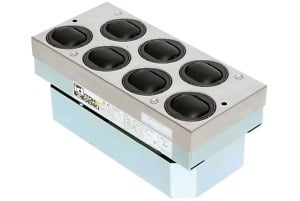
Um exemplo é o Itoh Denki Multi Angle Ball Sorter (MABS2), disponível pela Ultimation, uma empresa MCE. O sistema modular utiliza a tecnologia de roletes motorizados (MDR) de 24V da empresa em vez de desviadores pneumáticos, criando transferências de produtos programáveis e em múltiplos ângulos. Os módulos podem ser combinados para acomodar produtos maiores ou maior throughput, facilitando a adição de recursos de roteamento flexível em um espaço compacto e permitindo que os sistemas transportadores se expandam ou se adaptem conforme os requisitos operacionais evoluem.

Quando um Classificador de Esferas É uma Boa Escolha

Os classificadores de esferas são mais valiosos quando a versatilidade importa mais do que o throughput máximo.

Roteamento multidirecional

Algumas aplicações exigem que os produtos sigam para vários destinos a jusante. Em vez de projetar múltiplos pontos de transferência dedicados, um único classificador de esferas pode direcionar produtos em diferentes direções com base na lógica do sistema. Isso simplifica os layouts de transportadores e facilita mudanças futuras.

Espaço físico limitado

As instalações frequentemente precisam adicionar funcionalidades dentro do espaço já existente. Como os classificadores de esferas reúnem múltiplos recursos de roteamento em um módulo compacto, eles ajudam a maximizar o espaço disponível sem exigir modificações extensas no transportador.

Layouts sujeitos a mudanças

Novos clientes, demanda sazonal, mudanças no mix de produtos e canais adicionais de atendimento podem alterar o fluxo de materiais. O roteamento flexível permite que os sistemas transportadores se adaptem sem exigir grandes alterações mecânicas.

Por exemplo, um centro de distribuição de e-commerce pode inicialmente direcionar caixas para quatro estações de embalagem. À medida que o volume de pedidos cresce, novas faixas de embalagem são adicionadas e os fluxos de expedição mudam. Um classificador de esferas modular permite atualizar a lógica de roteamento e incorporar módulos de transferência adicionais sem redesenhar todo o layout do transportador.

Fluxo contínuo de produtos

Parar os produtos antes de transferi-los pode gerar pequenos atrasos que se acumulam ao longo de milhares de volumes. Os classificadores de esferas mantêm o movimento contínuo durante todo o processo de transferência, reduzindo interrupções e favorecendo um fluxo suave de produtos.

Quando um Classificador de Esferas Pode Não Ser a Escolha Certa

Em algumas situações, uma solução diferente pode oferecer melhor desempenho ou um custo total menor.

Transferências simples ponto a ponto

Se os produtos precisam apenas se mover de um transportador para outro em um ângulo fixo, uma transferência tradicional ou um desviador pop-up pode oferecer a mesma funcionalidade com menos complexidade.

Aplicações de alto throughput

Instalações que movimentam grandes volumes seguindo um padrão de roteamento consistente e repetitivo podem se beneficiar de tecnologias de classificação projetadas para throughput máximo. Os classificadores de esferas priorizam a flexibilidade de roteamento em detrimento da velocidade de classificação.

Produtos que não se transferem bem

Os classificadores de esferas funcionam melhor com produtos que possuem uma superfície de transporte estável e relativamente plana. Itens muito pequenos, produtos de formato irregular ou cargas com bases instáveis podem exigir métodos alternativos de transferência para garantir um movimento confiável.

Aplicações com pouca expectativa de mudança

Se os caminhos de roteamento dificilmente mudarão ao longo da vida útil do sistema, investir em uma solução de transferência altamente flexível pode significar pagar por recursos que nunca serão plenamente utilizados. Soluções de roteamento fixo podem, em alguns casos, representar uma abordagem mais econômica para ambientes de produção estáveis.

A melhor tecnologia de transferência depende dos produtos transportados, do throughput exigido, do espaço disponível e do grau de flexibilidade que a operação provavelmente exigirá no futuro.

Questions to Ask Before Selecting a Ball Sorter

multiple mabs2 used in conveyor lines

Como em qualquer investimento em automação, escolher a tecnologia de transferência certa começa com a compreensão da aplicação. Pergunte-se:

  • Quantos destinos os produtos precisarão alcançar?
  • Os requisitos de roteamento mudarão ao longo do tempo?
  • O espaço físico é limitado?
  • Já existem sistemas de ar comprimido disponíveis, ou eliminá-los simplificaria a manutenção?
  • Quais tamanhos, pesos e características de embalagem serão transportados?
  • Qual throughput é necessário hoje e qual provavelmente será daqui a cinco anos?

À medida que as operações de atendimento evoluem, os sistemas transportadores precisam evoluir junto. A tecnologia de transferência deve acompanhar as mudanças no fluxo de produtos, em vez de prender a instalação a caminhos de roteamento fixos.

Precisa de ajuda para determinar se um classificador de esferas é adequado à sua aplicação?

Os especialistas em movimentação de materiais da Ultimation podem avaliar seu fluxo de produtos, requisitos de roteamento e espaço disponível para ajudá-lo a selecionar a solução de transferência ideal. Entre em contato para discutir sua aplicação ou saiba mais sobre o Itoh Denki Multi Angle Ball Sorter.

New Video: How to Build an Overhead Conveyor

How to Build an Overhead Conveyor

Overhead conveyor installation

Overhead conveyors are great for many plants because they use the space above the production floor. Ultimation’s Alec Fitzgerald shows how companies can design and install their own Overhead Conveyor using the modular Unibilt System.


“The Ultimation and Jervis Webb Unibilt modular conveyor range is kind of like a LEGO set for overhead conveyors” says Ultimation Digital Marketing Supervisor, Alec Fitzgerald. “There is a huge range of pre-engineered components that can be joined together in a multitude of ways. Sometimes it’s easier to show this in a video, so we made this three minute segment to show you how.”

Fitzgerald says that many of his customers are able to design and install their own system once they have a good understanding of the components that are necessary and what is required to install them. “The Unibilt system is limited only by the imagination of the team working out the plan. So in addition to the layout that might come from the customer, we normally have some of our Ultimation specialists add some of their ideas as well” he said.

After the customer outlines the path their conveyor will follow, the Ultimation team creates a complete Bill of Materials (BOM) for the project. This BOM includes every component required for a full Unibilt installation, giving teams a clear, organized parts list to work from. Many companies then choose to have their own maintenance crews handle the installation using this detailed guide.