New Video: How to Build an Overhead Conveyor

How to Build an Overhead Conveyor

Overhead conveyor installation

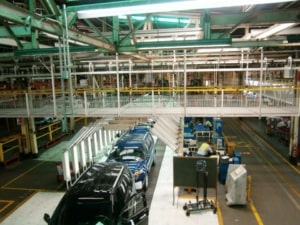
Overhead conveyors are great for many plants because they use the space above the production floor. Ultimation’s Alec Fitzgerald shows how companies can design and install their own Overhead Conveyor using the modular Unibilt System.


«The Ultimation and Jervis Webb Unibilt modular conveyor range is kind of like a LEGO set for overhead conveyors» says Ultimation Digital Marketing Supervisor, Alec Fitzgerald. «There is a huge range of pre-engineered components that can be joined together in a multitude of ways. Sometimes it’s easier to show this in a video, so we made this three minute segment to show you how.»

Fitzgerald says that many of his customers are able to design and install their own system once they have a good understanding of the components that are necessary and what is required to install them. «The Unibilt system is limited only by the imagination of the team working out the plan. So in addition to the layout that might come from the customer, we normally have some of our Ultimation specialists add some of their ideas as well» he said.

After the customer outlines the path their conveyor will follow, the Ultimation team creates a complete Bill of Materials (BOM) for the project. This BOM includes every component required for a full Unibilt installation, giving teams a clear, organized parts list to work from. Many companies then choose to have their own maintenance crews handle the installation using this detailed guide.


Take the Heavy Lifting Out of Palletizing with Automated Systems

Anytime you can remove a bottleneck in your warehouse or fulfillment center operations, that’s a win. Enter palletizers, which speed up one of the stages where slowdowns are most likely to occur.

Think of them as a lubricant for pallet-loading and -stacking.

In addition to being a labor-intensive process, manual pallet loading can also lead to inefficiencies, including inconsistent and poorly balanced pallet loads. Improperly stacked boxes can further increase the risk of product damage and workplace accidents.

Manual pallet-loading also can lead to repetitive motion injuries for workers. At a time when labor costs are rising and qualified employees are difficult to find, manual palletizing consumes valuable time and resources that could be better spent on higher-value tasks requiring human expertise.

Automated palletizers address these challenges by increasing efficiency, producing stable and uniform pallet loads, maximizing available warehouse space, and reducing the physical demands placed on your workforce.

Automated Palletizers: How Does It Work?

Automated palletizers use smart technology to optimize pallet stacking by determining optimal layer patterns based on each product’s size and dimensions. They quickly and efficiently load boxes onto each pallet, rotating them as necessary. This not only saves time, but helps make sure that pallet patterns are consistent.


Here’s what the workflow looks like with a Qimarox HR9 Palletizer:

  1. When new products arrive at your facility, team members load them onto a conveyor.
  2. As products travel along the conveyor, a 3D scanner scans the box dimensions.
  3. A pattern generator calculates all possible patterns and suggests the ideal arrangement for the pallet, based on the optimal number of boxes per layer and overall stability.
  4. As boxes arrive at the palletizer, they’re automatically arranged on the pallet.
  5. Palletizers can be combined with a pallet lift and conveyor system, so that each full pallet is stacked and then automatically replaced by an empty one for a smooth and continuous process.
  6. Products can be secured on the pallet as needed, at which point they’re ready for transport via forklift.
  7. When the container is empty and the last full pallet has been loaded, any remaining products can be stacked on an incomplete pallet.

Benefits That Stack Up

State-of-the-art palletizers are cost-efficient, and designed for high-throughput, safe product handling. Benefits include:

  • Smoother workflow: Palletizers automate the palletizing process from A to Z, starting with infeed and moving through to dispatch.
  • More consistent load quality: Palletizers create uniform load patterns with better stability, which reduces product damage during storage and transportation.
  • Boosted throughput: Faster handling of products with more stable and consistent pallet loads helps operations keep pace with accelerating production demands.
  • Improved workplace safety: Palletizers minimize repetitive lifting and bending, which reduces the risk of musculoskeletal injuries and creates a safer end-of-line environment.
  • Labor efficiency: Reduced dependence on manual stacking not only means less stress on team members — it leads to improved workforce utilization by freeing up employees to make better use of their time and talents. It also reduces error rates and boosts operational predictability.

Palletizers have payoffs across industries.

  • Manufacturers: finished goods handling and production line automation
  • Distributors: high-volume order fulfillment and improved shipping preparation
  • Consumer goods: mixed-product handling
  • Food and beverage: high-throughput packaging environments
  • Refrigerated and frozen foods: shorten transportation times, helping to prevent defrosting and maintain the quality of products

What Sets Qimarox Palletizers Apart

Ultimation offers high-capacity Qimarox palletizers for:

  • Automated product handling. Qimarox’s patented programmable pattern-forming method positions products at exact coordinates to optimize storage and vehicle space.
  • Smarter positioning. Products are arranged on pallets with ideal spacing to absorb bulging and help prevent damage. That ensures fully loaded pallets are not just stable, but solid, as well.
  • Flexible pallet pattern creation. The Qimarox Highrunner HR9 lets you choose between automatically generating the most suitable layer patterns for your products or selecting your own preferred layout.
  • Qimarox palletizers are designed to handle different package sizes and product types.
  • Superior product handling. Qimarox palletizers not only stack products securely and consistently, they slide products without manual or robotic lifting to minimize damage.
  • Easier maintenance. Qimarox technology facilitates the work of mechanics, with built-in camera systems that help quickly identify and resolve issues.
  • For growing operations, Qimarox palletizing solutions scale up to take on new challenges as needed.

When to Consider a Palletizer for Your Operations

If you’re experiencing any of the signs below, your operation may be ready for an automated palletizer:

  • Increasing order volumes. Do you need to increase your throughput to keep up with demand?
  • Frequent bottlenecks. Does your production line frequently slow down at the palletizing stage?
  • Labor concerns. Are you facing rising labor costs, or difficulty recruiting and hiring warehouse workers at the right level of skill and experience?
  • Safety issues. Are you seeing increased injuries, stress, and fatigue among team members because of manual handling?

How to Choose the Right Palletizing Solution

Here are four key criteria to consider that can point you in the right direction.

  1. Throughput requirements. What’s the volume of products you’re currently handling? How much does your capacity need to increase?
  2. Product characteristics. How variable are the products in your warehouse in terms of weight and dimensions? What special requirements do they have? How important is processing speed?
  3. Facility space constraints. How limited is your floor space, and are you making the best possible use of it? Would your operations benefit from a more efficient production layout?
  4. Future growth. What opportunities do you need to be ready for? What possibilities can increased throughput and better use of resources like space and labor unlock for your business?

The right palletizing solution can transform your operations, making them more flexible and adaptable in addition to boosting safety, efficiency, and throughput.

Interested in learning more about Qimarox palletizing solutions? Get in touch with our team.

How Spring-Assisted Lift Gates Remove Barriers to Productivity

Looking to safely improve warehouse efficiency? Learn how spring-assisted…

Still Running Portec or Jervis Webb Systems? We Keep Them Moving

Legacy conveyors are a known risk. Portec and Jervis Webb systems may still be moving product every day, but everyone knows the question isn’t if

a part will fail – it’s when, and how fast a replacement can be found. One damaged trolley, worn belt, or missing lacing clip can bring an entire line to a halt.

Portec and Jervis Webb systems

When that happens, time matters more than anything. And for older systems, time is often lost trying to identify parts, track down documentation, or navigate OEM

channels that no longer move at production speed.

This is where Ultimation, an MCE company, steps in.

As an authorized distributor and integrator for Itoh Denki, Interroll Portec, Daifuku/Jervis Webb, and Qimarox, Ultimation helps facilities keep legacy conveyor systems running with the right parts and support that moves as fast as production demands.

The Challenge: Supporting Legacy Jervis Webb & Portec Systems


Portec and Jervis Webb engineered their systems for long service life, and many have exceeded expectations. But longevity comes with tradeoffs. Maintenance teams supporting these systems often face the same issues:

  • A single failed roller, trolley, or lacing clip halts production
  • OEM support is slow, fragmented, or difficult to access
  • Lead times for legacy parts continue to grow

The result is avoidable downtime and reactive maintenance on systems that otherwise still have years of useful life left.

How to Keep Your Portec and Jervis Webb Systems Running

Supporting older conveyor systems requires more than a parts list. It requires knowing how these systems were built, how they fail, and which components can be replaced without introducing new issues.

Ultimation helps facilities keep Portec and Jervis Webb systems running reliably when OEM pathways slow down or disappear.

Retrofit Options to Extend System Life

In many cases, replacing an entire conveyor line isn’t necessary or justified. Targeted retrofits can extend system life while improving performance, control, and reliability.

The process often begins with a review of existing system specifications and operating conditions. From there, Ultimation can quote upgrades such as converting a gravity conveyor into a motorized system with zero-pressure accumulation control.

Importantly, this evaluation doesn’t require an on-site visit. Ultimation works remotely with customer teams to define scope, confirm compatibility, and clearly outline what the updated system will include. The result is a faster path to modernization that minimizes disruption and avoids the cost and delays of full replacement.

Portec Support

Customers can provide a serial number and a brief description of the issue. Ultimation handles identification, sourcing, and quoting. Common requests include replacement belts and lacing clips, which Ultimation supports through its partnership with Interroll’s legacy support group.

Jervis Webb Support

Facilities running Jervis Webb Unibilt overhead conveyors rely on Ultimation for trolleys, track components, and hard-to-source legacy items. Ultimation’s work in this area has been formally recognized by Daifuku, a reflection of its deep experience supporting these systems in real operating environments.

Repair, Retrofit, or Replace a Legacy Portec or Jervis Webb Conveyor?

Not every issue with a Portec or Jervis Webb system requires the same response. The right path depends on how the system is failing, how critical it is to operations, and what risks the facility is willing to accept going forward.

Understanding the difference between a repair, a retrofit, and a full replacement helps teams make smarter decisions under pressure.

Repair: Addressing Isolated Failures

A repair is often the right choice when the system is fundamentally sound and the failure is localized. Repair typically makes sense when:

  • The issue is limited to a small number of components, such as a worn belt, damaged trolley, or failed lacing clip
  • The system layout and throughput still meet operational needs
  • Downtime risk is driven by part availability rather than system design

In these cases, sourcing the correct replacement parts quickly can restore performance without introducing new variables or unnecessary cost.

Retrofit: Extending Life and Reducing Risk

Retrofits are appropriate when a system still provides value but shows signs of recurring issues, limited control, or increasing maintenance burden.

Retrofit options may include:

  • Converting gravity conveyors to motorized systems with zero-pressure accumulation
  • Updating drives, controls, or safety features to meet current standards
  • Replacing obsolete components with modern equivalents that improve reliability

For many facilities, retrofits offer the best balance between cost and performance: extending system life while reducing downtime risk and improving day-to-day operation.

Replace: When Legacy Becomes a Liability

Full replacement becomes necessary when the system can no longer support production requirements or when downtime risk outweighs the cost of new equipment.

Replacement is often the right path when:

  • Failures are frequent and unpredictable
  • Parts are consistently unavailable or require long lead times
  • The system no longer aligns with throughput, safety, or integration needs

While replacement requires higher upfront investment, it can eliminate chronic risk and support future automation initiatives.

Facilities benefit most when they work with partners who understand Portec and Jervis Webb legacy systems well enough to evaluate all three paths objectively. Whether the answer is a fast repair, a targeted retrofit, or a longer-term replacement plan, the goal is the same: Keep operations running safely, reliably, and predictably.

Why Choose Ultimation as Your Aftermarket Partner?

Choosing Ultimation isn’t just about access to parts. It’s about speed, clarity, and experience with systems that don’t behave like modern equipment.

Customers work with a team that understands how legacy conveyors fail, where tolerances matter, and how to restore performance without creating new problems. That insight helps maintenance teams plan proactively and respond quickly when downtime hits.

If you’re supporting a Portec or Jervis Webb system, start with the serial number, or simply describe the issue you’re seeing. Ultimation will help you identify the right path forward, whether that’s a replacement part, a retrofit, or a longer-term upgrade plan.

Why Retractable Conveyors Are a Game Changer for Dock Operations

Why Retractable Conveyors Are a Game Changer for Dock Operations

Loading docks keep goods moving, but they can also slow everything down. If your workers spend valuable time walking loads across the floor or waiting for space to clear, productivity suffers. These challenges become even more pronounced as shipment volumes rise and fall throughout the day or spike during seasonal peaks. Fixed infrastructure often can’t keep up with that variability, leading to congestion, delays and higher labor costs.

More warehouses are turning to retractable conveyors to address these challenges head-on. These dynamic systems allow dock teams to adapt in real time. They speed up loading and unloading while improving ergonomics and safety without the price tag of a permanent installation.

Flexible Material Handling Conveyor

What Are Retractable Conveyors?

Retractable or flexible conveyors are designed to reshape as the job requires. They twist and bend to follow a curved path. They expand to reach deep into a trailer, then fold away into a compact footprint once the last carton clears the dock. Gravity models offer an economical, highly maneuverable option, while powered motor-driven roller (MDR) versions add automated flow control for faster throughput and reduced physical effort.

Ultimation also offers AMR pallet movers that pair with expandable conveyors, allowing palletized goods and parcel cartons to move seamlessly from trailer to warehouse storage without gaps in the process. Together, these systems create a fluid loading and unloading environment that adjusts with shifting demand.

Key Benefits of Retractable Conveyors for Dock Operations

Retractable conveyors deliver immediate value where it matters most at the loading dock. Here’s how they make an impact on daily dock operations.

Adaptable to Any Dock or Trailer

Dock configurations change constantly. Doors open and close, trailer heights vary from truck to truck, and space must remain clear for forklifts and staging. Flexible conveyors adjust to all of it. They fit where fixed conveyors cannot: around corners, in tight spaces, and across multiple loading points. If operations reconfigure next month to accommodate a new customer or workflow, the conveyors move with them.

That adaptability is especially valuable as demand fluctuates. During peak hours or high-season surges, additional units can be rolled into place and extended into multiple trailers simultaneously. When volume dips, the equipment collapses and stores neatly out of the way. You only use what you need when you need it.

Faster Loading and Unloading

A retractable conveyor changes the loading rhythm by bringing the work to the operator. Instead of walking back and forth inside a truck, employees can stay positioned while cartons steadily move past them. This reduces dwell times for every trailer, increases the number of loads a dock can turn per shift, and minimizes the repetitive movements that contribute to fatigue and injury.

Even modest improvements in walking distance translate to major labor savings when multiplied across trailers, shifts, and seasons.

Scaling with Seasonal and Unexpected Spikes

Few warehouses run at a constant, predictable pace. Retail distribution ramps up for holidays. Food and beverage demand shifts weekly. B2B suppliers experience sudden surges tied to customer projects or industry cycles.

Expandable conveyors make capacity scalable. Instead of overbuilding permanent systems “just in case,” facilities can introduce more conveyors when demand rises and collapse them when operations normalize. They become a pressure-release valve for the dock, absorbing spikes without adding headcount or expanding square footage.

Space Savings and Easy Storage

Dock space is some of the most valuable real estate in a warehouse. Because retractable conveyors can be condensed and wheeled aside when not in use, aisles stay clear for forklift traffic, staging, and safety checks. Teams avoid the cramped layouts and trip hazards that permanently installed equipment can create.

Space flexibility also helps facilities more easily reconfigure to support faster delivery expectations and SKU growth.

Cost-Effective Efficiency

Retractable conveyors deliver many of the same performance benefits as permanent roller systems but without the upfront construction, installation time, and inflexibility that come with them. Companies can start with a single unit and expand based on demand. They can test new workflows without committing to layout changes. And because the systems are modular and durable, they remain a long-term asset even as operations evolve.

Safety and Ergonomic Improvements

Fewer steps and reduced lifting lower employee strain and help prevent workplace injuries. Streamlined workflows also cut congestion around the dock area.

Retractable Conveyors in Action

Picture a typical peak-season morning: Multiple trailers arrive at once, workers scramble for floor space, and lines build while teams try to keep up. With an expandable conveyor, one operator positions the unit, extends it into the trailer, and immediately begins unloading. While that load is moving, a second conveyor rolls into place at the next door. The dock no longer dictates the pace — the operation does.

That’s the kind of efficiency gain that distribution centers, manufacturers, and 3PLs count on during their busiest times of the year.

Flexible conveyors are a practical, high-impact way to modernize dock operations. They ensure speed when volumes surge and efficiency when they level off. That helps facilities maintain the flow of goods no matter what the day brings.

Talk to Ultimation today to see how flexible conveyors can transform your dock operations year-round.